
Every brother finds his own way forward after graduation, and those career paths can take interesting turns along the way. In this Sigma News, we’ll look at the career paths of two members and close friends who graduated a dozen years ago: Johnny Hill ’06 and Adam Sansiveri ’05. One built a fast-growing taco business before moving into private equity, and the other was producing Broadway shows and is now in wealth management. Both share a common interest in giving back and helping others, and show how passion can drive career success.
Alumni Profile: Meet Johnny Hill ’06
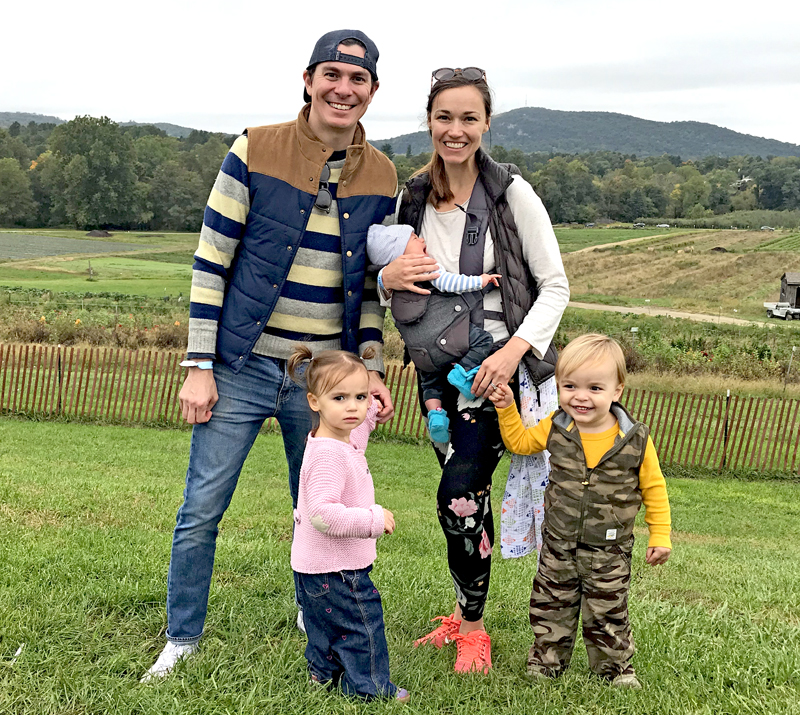
What was your major at Cornell and what were your career aspirations then?
I was an economics major in the College of Arts & Sciences. When I first got to Cornell, I thought I wanted to go into politics, but sometime around my junior year, I knew I wanted to do something entrepreneurial and creative with my career.
You got your start in private equity working at L Catterton focused on food and beverage and hospitality companies. What were your responsibilities?
My responsibilities were split between evaluating and acquiring new companies and helping our portfolio companies optimize their business for scale. As my career at L Catterton progressed, I found myself gravitating toward the operations side of the business more than the acquisitions side.
What was the inspiration for Tacombi and how did you transition into the role there as president?
I wanted to initially leverage my private equity experience at L Catterton to start my own fast casual restaurant concept. However, never having been a true operator, I decided I would get some experience first. I was introduced to the founder of Tacombi, who had just brought this Volkswagen bus from Mexico to New York City to sell tacos out of and I thought, this sounds fun. I brought growth and financial expertise to the table, he brought a passion for brand building and Mexican culture, and together we were a pretty good combo and built something special.
We grew Tacombi from one location and 15 employees in 2011 to six locations and 200-plus employees in 2017, as well as launched Vista Hermosa, a line of all-natural Mexican food products including tortillas, chips, and salsas, which can be found in Whole Foods and other specialty grocers across the northeast.
What was it like running an entrepreneurial taco business?
When I was serving as the CFO at Tacombi, my Sigma Nu pledge brothers liked to joke that I was literally a bean counter at a Mexican restaurant. Running Tacombi was a ton of fun and incredibly challenging, but most importantly it showed me how impactful a business can be on its people, community, and environment. I think it also prepared me for having kids because a start-up is like a child; sometimes it needs to be nurtured, other times it needs to be pressured, but it’s always challenging and rewarding.
You left Tacombi in in an operational role earlier this year to found Lagniappe Capital Studio, a new type of private equity company. What does Lagniappe stand for and what was the genesis of this effort?
A “lagniappe” is traditional to Louisiana heritage (where I am originally from) and is an unexpected token of generosity or way of good measure. Our mission at Lagniappe Capital Studio is simple: to reshape the relationship between capital, communities, and companies to make change.
The genesis behind LCS was that the approach that I took at Tacombi could be applied to other brands that have a great story but lack the operational/financial infrastructure to scale up and pursue pro-social initiatives in order to create long term value. Our mandate at LCS is to invest in authentic, heritage-rich brands that want to grow their businesses AND create a lasting, positive impact on society by adhering to the highest standards of social and environmental accountability.
Our pro-social approach is two-fold: 1.) “Plan B,” which is our commitment toward getting each one of a brand’s investments on track to becoming certified B-Corp, whose mission is to use business as a force for good (good examples are Patagonia, Ben & Jerry’s, and Warby Parker); and 2.) our “Community Carry” initiative, which is our reinvestment approach whereby half of our carried interest at exit is reinvested back into the local communities our investments call home to causes that LCS and the management teams are mutually passionate about, delivering a win-win-win to the company, the community, and our investors. That’s the lagniappe!
What types of businesses will Lagniappe be investing in?
Our first investment was into a group of New York City cafes, The Grey Dog, which has been a New York favorite for over 22 years. We serve coffee, brunch, dinner, and drinks all day every day, bringing a little bit of upstate charm downtown.
Our plan is to grow from four locations to 20 over the next five years and tighten up the brand and menu for scale, focusing on creating super simple and delicious food made from awesome, local ingredients. Despite being in business for 22 years, each of our locations still has lines out the door every weekend, so we’re pretty excited to share this with a larger audience.
We plan on investing in other verticals outside of hospitality once we’ve raised our first committed fund, but our immediate focus is on making The Grey Dog as strong and impactful of a brand as it can be.
Where do you want Lagniappe to be five years from now?
I want Lagniappe to be a pioneer in reshaping the way capital markets think about impact and show that financial returns and impact are not mutually exclusive. Hopefully, in five years we will have a fully committed fund and a team of folks who are equal parts entrepreneurs, philanthropists, and investors all rolled into one.
How did your time at 230 Willard Way prepare you for life after college?
The thing I probably learned most from my time at Sigma Nu was how to connect with people who come from all sorts of backgrounds with varying ideals, perspectives, and passions. As commander, I also learned how to run an undercapitalized organization there as well. 🙂
What advice do you have for undergraduates interested in a career in food/beverage services or hospitality?
Pursue things that you are really passionate about. And don’t be afraid to not make a lot of money.
How about a career in private equity?
Try to find a firm that invests in industries that you are deeply interested in. And like everything else, it all comes down to people. Make sure you love the people you will be working with.
What are your fondest memories of life at Sigma Nu?
That’s an impossible question. Some things that immediately come to mind are dinners and sharing laughs in the dormer. Nobody will ever laugh more or harder than they did during their time at Sigma Nu, particularly in the dormer.
If you could live in Sigma Nu for one day, what would you do that day?
Assuming it’s a Saturday in football season, I would wake everyone up fairly early to start tailgating. We’d go cheer on the Big Red, and then head back to the house for a little backyard barbeque and cornhole. Wrap up the night with an after hours. Sounds glorious.
How do you stay connected to Cornell and Sigma Nu?
Our crew is still very tight from college and many have invested in LCS, which I am tremendously appreciative of. We get together occasionally as well, most notably for Double Duck dinners around the holidays. For the guys not in New York City, fantasy football serves a great way of staying in touch. A bunch of us recently took a weekend trip back to Ithaca and it was great to stop by the house and chat with the guys.
Brothers who want to connect with Johnny can reach him at johnny.r.hill@gmail.com. You can find out more about Lagniappe at www.lagniappecap.org, and if you want a great brunch or tacos in NYC, check out The Grey Dog (www.thegreydog.com) or Tacombi (www.tacombi.com).
Alumni Profile: Meet Adam Sansiveri ’05
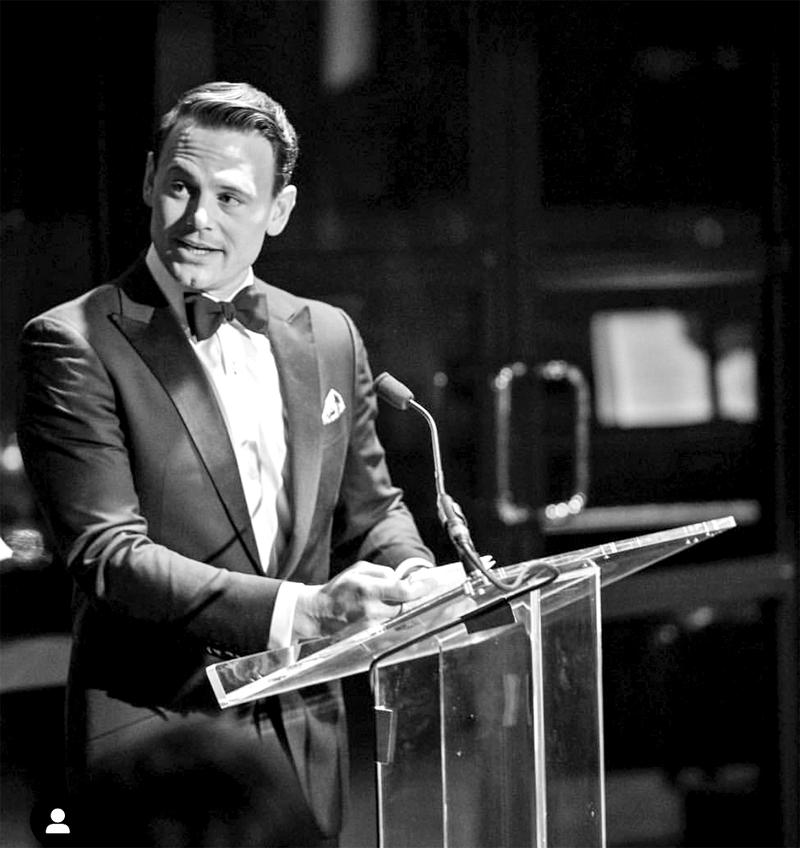
Career paths are rarely straightforward. How did yours unfold out of college?
I moved to New York City with medical school in mind. I had wanted to be an orthopedic surgeon since I was three years old. That plan shifted quickly when I found success as a professional singer and actor. In under two years I performed in a number of major productions in and around New York. I performed at Carnegie Hall and the Verbier Festival in Switzerland, amongst many others. However, I realized it wasn’t the lifestyle I wanted and that I wanted to create something myself. I decided to start a small business, which is how I got into design and technology. I partnered with a pal from the track team at Cornell and we launched a company called RNA Designs.
How did you add being a theater producer into the mix?
While performing in New York, I became friends with a young theater producer. After I exited RNA Designs, I was looking for ways to create art and leverage my passion for business and creation. He taught me the ropes before I went on to co-produce my first show. At 24, I was the youngest above the title Broadway producer ever at the time. It was a thrilling experience to help create such impactful art that was touching millions of people. We went on to co-produce a number of shows together after that, and I’ve invested in over a dozen shows since then.
What was the Broadway experience like?
It’s a great business in so many ways. Every day you’re surrounded by some of the most talented people on the planet, and you get to help create the medium that allows them to showcase those talents. It’s also a hard business. Seven out of 10 shows lose all their money, two break even, and one is a huge financial success. Picking the winners can sometimes feel like the lottery, but that is the art of being in the business of entertainment. I decided to go back to school and get my master’s degree in media management and economics while I was producing, with the desire of doing more and continuing to learn.
Tell us about Broadway Dreams and your ongoing work with this nonprofit as chairman of the board to create opportunities in musical theater.
Broadway Dreams is one of the most inspiring and prolific performing arts education foundations out there. Each year, we help dozens of students (about 63 in 2017) reach their dreams by being cast on Broadway or other major professional productions. I joined the board about eight years ago and have since sat as the finance chair and then as the chairman these past two years. As someone who understands the true value and impact that performing arts education has on a student, regardless of whether you are an aspiring professional or not, it’s been incredibly rewarding to help further the mission of the organization. Since joining the organization, I’ve seen it grow to over 10 U.S. cities and five other countries. We have some other really big things in the works that we’ll be announcing in 2019.
You are currently a managing director at Bernstein Private Wealth Management and have spent eight years with Bernstein. What satisfies you most about this job?
It’s an incredible company that is wholly unique in the money management world. I would never do this job anywhere else. I was drawn out of being an entrepreneur and into Bernstein because they knew how to shape my diverse array of passions and excitement for people into something greater. I was hired as one of the youngest advisors ever at the company and saw fast success building a practice focused around prominent musicians, athletes, entrepreneurs, and other inspiring individuals. In 2015, I became one of the youngest principals in the history of the firm, and this year became the youngest managing director. The most satisfying thing about my job is helping incredible people realize their missions of impact on the world while getting to bring all of my own passions into my job every day.
I’m fortunate that I’ve had another Sigma Nu brother to mentor me along the way, Joel Stevens ’90. He has worked for Bernstein for more than 20 years, is a good friend, and we get to work together in the New York office.
How has the role of a wealth manager changed since you started and where do you see things going in the next few years?
The investment world continues to become commoditized on the lower end of the wealth spectrum due to technology and price compression. However, the upper end of the spectrum continues to become more complex and advice continues to become ever more important. I see a continuation and acceleration of this trend and sophisticated firms like ours thriving along with it.
Where do you see yourself in five years, as clearly you are a motivated entrepreneur?
Thank you for the compliment. I always have my hands in different things, so I never know what will be on my plate a year from now. I see myself running or potentially creating an entire new office with Bernstein as the next step of my career, continuing to increase my support and involvement in start-ups and the arts, and focusing even more on philanthropy.
Are there any common themes that tie together all your professional experiences?
Passion. I learned early on while trying to pursue a career as an opera singer that it is far more scalable to bring your passions with you than it is to chase them. That realization is what has allowed me to do so many different things and do them well. My passions for giving back, helping others, content creation, performance, business, and disruption are the same things that allowed me to thrive as an entrepreneur and on Wall Street.
How do you manage working to be an expert and capable across many fields at the same time?
I think this is more of an art than it is a science. It is partly driven by passion and the underlying skills that are translatable to many different things. It’s also part being a good leader and knowing when to surround yourself with great people. Add in a lot of hard work and curiosity about the things you must be an expert on to succeed and you can surprise yourself how much can be accomplished in a day.
How did your time at 230 Willard Way prepare you for life after college?
There are friendships and bonds formed in that house that will never break. Being commander of Sigma Nu for my time gave me an early taste of what it was like to need to work to understand what is most important to other people. Then taking that knowledge and translating it to action is something I learned during my time at Willard Way that I use every day.
What advice do you have for undergraduates interested in a career in wealth management?
Be interesting and different. Do as much as you can and it will make you far more valuable in this industry and almost all others. I see hundreds of candidates with just basic finance backgrounds, but it is those who have far more complexity and intellectual curiosity that grab my attention. And of course, hard work pays off.
How about a career in theater?
Find a mentor who can help guide you. Broadway is a very hard and competitive industry within which to reach the top. You need to be ready to work as hard as those graduates going into entry level finance jobs.
What are your fondest memories of life at Sigma Nu?
Dinners with all our brothers. Also learning how to and how NOT to party.
How do you stay connected to Cornell and Sigma Nu?
I’m on the alumni executive committee for the Cornell Track and Field team, so I stay involved this way. Beyond spending time with my best friends from Cornell and Sigma Nu, I try to hire a lot of Cornellians and visit the house every couple of years.
Brothers who want to connect with Adam can reach him at Adam.Sansiveri@bernstein.com. To learn more about Bernstein visit www.bernstein.com and see www.broadwaydreams.org for Broadway Dreams.