
The healthcare system in the United States is in the headlines almost daily. Many Sigma Nu brothers today work in healthcare across a broad range of job roles, including physicians, administrators, medical-device manufacturers, and pharmaceutical sales reps.
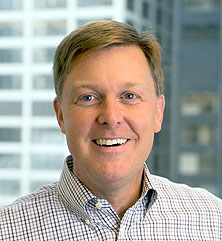
Tim Barry ’93 is the founder and CEO of VillageMD, a Chicago-based company that is innovating primary care. VillageMD is a leading national provider of primary-care management services for healthcare organizations moving toward a primary-care-led, high-value clinical model.
What marketplace problem is VillageMD working to solve?
The U.S. healthcare system is horribly broken. We currently spend about $3 trillion per year (2.5 times that of other industrialized nations) on healthcare with quality of care outcomes that are slightly better than Slovenia (not a joke).
At the core of our healthcare quality and cost problems are two phenomena: (1) a fee-for-service healthcare reimbursement model that pays providers more to do more services (e.g., more hospitalizations equals more revenue for a hospital), and (2) a lack of support for primary-care providers to take care of the 20 percent of our population with chronic and debilitating illnesses that incur 80 percent of the total medical spending.
What was the genesis of VillageMD?
After years of running medical groups and health-insurance companies, my co-founders and I built a healthcare model that redefines the way primary care works. We embed sophisticated analytics, technology, and a slew of people into primary-care practices to help create better outcomes for all of our patients. Most importantly, we do this in a way that doctors and patients love, because doctors can now meet all of the needs of their sickest patients, while simultaneously improving the health of their overall population of patients.
We have now brought this model to a network of over 600 primary care practices around the country and manage about $1.5 billion of total medical spend.
Healthcare is in the news literally every day for many reasons. From your perspective, what are the biggest challenges in healthcare today for the average consumer/patient, and can VillageMD help them?
For those of us who are incredibly fortunate to maintain good health, we should consider ourselves lucky that we do not need to navigate this confusing healthcare system.
For those struggling with chronic disease or some other form of illness (the 20 percent that incur 80 percent of the total spending), our fee-for-service healthcare system does a horrible job of coordinating care across all of the needs that sick people have.
It is sad to say, but our system generally requires people to navigate the complexity of their disease(s) on their own. A person with seven or eight chronic conditions might have to see 10 to 12 medical specialists, take 15 to 20 medications, and purchase all kinds of medical equipment. Unless you are a medically savvy individual, you will experience all kinds of difficulties trying to manage your own health.
The VillageMD model was built to solve this problem.
What are the primary business goals for VillageMD in 2017?
Our primary goal is to wake-up every day and have a positive impact on the lives of our primary-care partners and their patients. If we keep doing that, we will continue to grow around the country, and our results will speak for themselves.
Where do you see VillageMD five years from now?
It has taken decades for our healthcare system to get as screwed up as it is today, and I expect it will take decades to fix it. So, in five years, I expect us to be a few more steps along on this journey to create a better healthcare system that works for physicians and patients.
What career advice do you have for Sigma Nu brothers interested in a career in the medical field?
Dive into the details. At nearly 20 percent of the GDP, healthcare is a huge, complex industry and difficult to learn. With that said, if you want to have real impact on the healthcare system, you can’t do it from the cheap seats. You need to go where the rubber meets the road, and that is always where patients, doctors, and data intersect.
What was your major at Cornell?
My major was agricultural economics, now called applied economics and business management.
Many Sigma Nu alumni today work in fields or with tools that were not even remotely a part of their undergraduate experience, like the internet. How do you personally adapt to changing technology and marketplace influences that are hard to predict but potentially profound in impact?
Healthcare is pretty bipolar from a technology standpoint. Some of the greatest advances in science occur in healthcare (e.g., genomics, medical devices), yet we also seem to have data and administrative systems that act like the banking industry in the 1990s. Personally, I try to read as much as I can on the scientific discovery front, while also having a cutting edge group of technologists in our company who push us to think differently about ways to embed technology into our information systems and workflow.
What are your fondest memories of Sigma Nu?
My experience at Sigma Nu was incredible. My closest friends in life are still the guys from Sigma Nu, and my fondest memories are mostly just hanging out. It’s hard to pin down a particular set of memories as they measure in the hundreds or thousands. It is mostly the faces and laughs I think about.
What activities did you participate in at the house?
I was house manager, dishwasher, and played intramural sports. The majority of us also lived in the house “back in the day,” so we all seemed to be a part of all activities. There was a special camaraderie of everyone being together that just added an entirely new dimension to the experience.
How did Sigma Nu prepare you for life and your career?
Living with over 40 guys, you learn a ton about yourself, about getting along with others, and about being a part of something larger than yourself. I think these are all applicable for life after you leave the hallowed halls of 230 Willard Way.
How do you stay in touch with Sigma Nu and Cornell?
Living in the Midwest, raising a family, and running a business make it fairly difficult to keep the same ties that I’d ideally have. It is mostly through Reunion, social media, and phone that I stay in touch. With that said, VillageMD started recruiting at Cornell in 2015, and we have been lucky enough to recruit some amazing talent. I’m able to generally stay in touch through the work we do on campus.
If you could go back to school at Cornell today and live at 230 Willard Way, what’s the first thing you would do?
See if there is some leftover pizza in the fridge!
Brothers interested in connecting with Tim or learning more about VillageMD can email him at tbarry@villagemd.com.